
Lynden Lawn Care
20 Years of landscaping experience.
Welcome to Lynden Lawn Care
Lynden Lawn Care has been serving residential and commercial clients for over 20 years with dependable landscaping and property maintenance services. Built on real-world experience and a strong work ethic, the company takes pride in delivering consistent results and paying attention to the details that matter. Their team continues to provide reliable lawn care, landscape services, and seasonal upkeep to ensure every property stays well-maintained throughout the year.

Lawn Fertilization Oakville Ontario
Effective lawn fertilization in Oakville Ontario requires understanding your soil composition, selecting the right nutrient formulation, and timing applications to your region's climate and grass type. Lynden Lawn Care has spent over 20 years perfecting turf care across Oakville and the Greater Toronto Area, and this guide walks you through the professional process that keeps residential and commercial properties healthy year-round.
Oakville's clay-based soil and temperate climate create specific conditions that demand precision in fertilizer selection and application timing. Whether you manage a residential property or oversee commercial grounds, understanding these steps will help you achieve dense, resilient turf without waste or environmental harm.
1. Test Your Soil Composition and pH Level
Before applying any fertilizer, send a soil sample to a certified laboratory for analysis. In Oakville, most soils lean toward neutral to slightly alkaline pH (6.8 to 7.2), but clay-heavy areas can vary significantly. A professional soil test reveals nitrogen (N), phosphorus (P), and potassium (K) levels, along with micronutrients like magnesium and manganese that influence turf color and resilience.
Collect samples from at least five different areas of your property, mixing them in a clean container. Take samples at a 3 to 4-inch depth to capture the root zone accurately. Most tests return results within one to two weeks and include specific fertilizer recommendations based on your grass type and current soil deficiencies. This step prevents over-application and unnecessary expense, which is why Lynden Lawn Care always begins with soil analysis for turf care and fertilizer application work.
2. Identify Your Grass Type and Select the Appropriate Fertilizer Formulation
Oakville properties typically feature cool-season grasses such as perennial ryegrass, Kentucky bluegrass, or tall fescue. Each has distinct nutrient demands and growth cycles. A balanced formulation like 10-10-10 or 20-10-10 works broadly across most residential lawns, but cool-season turf in Ontario benefits from higher potassium ratios in autumn to strengthen winter hardiness.
Read the N-P-K ratio on every bag carefully. The first number represents nitrogen, which drives blade growth and color; the second is phosphorus for root development; the third is potassium for disease resistance and stress tolerance. Slow-release or controlled-release fertilizers (often indicated as polymer-coated or urea-formaldehyde products) deliver nutrients gradually over 8 to 12 weeks, reducing runoff and providing steadier growth compared to quick-release formulas. Lynden Lawn Care applies both organic and synthetic options depending on your property's environmental concerns and performance goals.
3. Determine the Correct Application Rate
Application rates are measured in pounds of actual nitrogen per 1,000 square feet. For most cool-season lawns in Oakville, apply 0.5 to 1.0 pounds of nitrogen per 1,000 square feet per application. Multiply your lawn's total square footage by this rate and divide by the percentage of nitrogen in your chosen product to calculate the exact amount needed. For example, a 5,000 square-foot lawn receiving 1 pound of nitrogen per 1,000 square feet requires 5 pounds of nitrogen total; with a 20-10-10 fertilizer (20 percent nitrogen), you would apply 25 pounds of product.
Avoid the temptation to increase rates beyond recommendations. Excess nitrogen promotes soft, disease-prone growth and leaches into groundwater, creating environmental liability. professional applications maintain consistency and precision that homeowner estimates often miss.
4. Time Applications to Your Local Growing Season
In Oakville and the surrounding Greater Toronto Area, cool-season grasses peak during spring and autumn when temperatures range between 60 and 75 degrees Fahrenheit. Plan your fertilization schedule around these windows. Apply a light feeding in early spring (late April through May), a stronger application in late summer to early autumn (August through September), and a final low-nitrogen application in late autumn (October through November) to support winter survival.
Avoid fertilizing during summer heat stress or when soil moisture is critically low; nutrient uptake declines and burn risk increases. Similarly, do not apply to frozen or waterlogged ground. Lynden Lawn Care times commercial property maintenance and seasonal fertilizer applications to coincide with your property's specific microclimate and usage patterns, accounting for foot traffic, shade patterns, and drainage characteristics unique to each site.
5. Choose Your Application Equipment and Method
Two primary methods dominate professional turf care: granular broadcast spreading and liquid foliar application. Granular spreaders come in drop-type (rectangular discharge pattern, ideal for precision near beds and borders) or rotary-type (circular dispersal, faster for large open areas). Liquid applications via sprayer equipment allow tank-mixing with other treatments such as wetting agents or biological inoculants, improving nutrient uptake efficiency.
Calibrate your spreader before each use. Fill the hopper, measure out a known weight of fertilizer, apply it across a measured area, and verify the actual coverage matches the spreader's dial setting. Settings vary by granule size and product density, so do not assume yesterday's setting applies today. For commercial properties across Oakville, Lynden Lawn Care uses professionally calibrated equipment that ensures uniform application and eliminates bare patches or over-concentration.
6. Apply Fertilizer in Two Perpendicular Passes for Even Coverage
Make your first pass in one direction across the lawn, then make a second pass perpendicular to the first (north-south, then east-west, for example). This cross-pattern technique minimizes missed strips and reduces edge streaking. Slightly overlap your passes to avoid gaps. On residential properties, walk at a steady pace; rushing creates inconsistent spacing between granules and uneven nutrient distribution.
Keep the spreader off until you reach your intended starting point, and shut it off before you stop moving. Never allow the spreader to discharge while stationary, as this creates concentrated piles that can scald turf and waste product. Property managers overseeing Oakville commercial grounds benefit from professional application because commercial equipment and trained operators eliminate human inconsistency.
7. Water Thoroughly After Application
Within 24 to 48 hours of applying granular fertilizer, water your lawn with at least 0.5 to 1 inch of irrigation. This activates granules, carries nutrients into the soil, and prevents turf burn from salt accumulation on leaf blades. If rain falls within 24 hours, skip supplemental watering. For liquid applications, light irrigation after spraying helps move nutrients toward roots, though many liquid products are absorbed directly by foliage.
Avoid heavy foot traffic immediately after application, especially on dry turf, as this can damage seedlings and compress the soil. Mark off treated areas if necessary on commercial properties. Continue regular watering schedules throughout the growing season to maintain consistent soil moisture and nutrient availability.
Professional lawn fertilization in Oakville Ontario demands attention to soil science, regional climate, grass biology, and application precision. When applied correctly, fertilizer transforms thin, pale turf into dense, resilient growth that withstands foot traffic, disease pressure, and seasonal stress. Whether your property is residential or commercial, Lynden Lawn Care combines technical expertise with reliable communication to develop customized turf care and fertilizer application plans suited to your property's unique conditions and goals. Contact Lynden Lawn Care today to discuss your lawn's specific needs and schedule an initial soil analysis.
Frequently Asked Questions
What is the best time of year for lawn fertilization in Oakville, Ontario?
Cool-season grasses in Oakville respond best to fertilization in spring (late April through May) and autumn (August through September) when temperatures support active growth. A light winter application in November strengthens cold hardiness. Avoid fertilizing during summer heat or when soil is frozen or waterlogged.
How do I know what fertilizer ratio to use for my lawn?
A professional soil test reveals your lawn's current nutrient levels and pH, enabling you to match the right N-P-K ratio to your specific soil. Most Oakville lawns thrive on balanced formulations like 10-10-10 or slightly higher potassium in autumn (20-10-10). Your test results will recommend exact products and application rates.
Can I apply too much fertilizer to my lawn?
Yes. Excess nitrogen promotes soft, disease-prone growth and contributes to water pollution through runoff. Follow soil test recommendations and spreader calibration strictly. Over-application wastes money and harms both your turf and the environment.
How much does professional lawn fertilization cost in Oakville, Ontario?
Pricing varies based on property size, soil conditions, grass type, and your chosen fertilizer formulation and application frequency. Contact Lynden Lawn Care directly for a customized estimate tailored to your specific property and needs.
Should I use granular or liquid fertilizer?
Granular spreaders suit broad residential applications and offer consistent nutrient delivery over 8 to 12 weeks, especially with controlled-release products. Liquid applications allow faster coverage and tank-mixing with other treatments. Professional operators assess your property and recommend the most cost-effective and efficient method.
What should I do after applying fertilizer to my lawn?
Water thoroughly within 24 to 48 hours with at least 0.5 to 1 inch of irrigation to activate granules and carry nutrients into the soil. Avoid heavy foot traffic on freshly treated areas. Continue regular watering throughout the growing season to maintain consistent soil moisture.
Is professional soil testing really necessary before fertilizing in Oakville?
Yes. Soil tests reveal nutrient deficiencies, pH levels, and micronutrient imbalances specific to your property, preventing waste, unnecessary expense, and environmental harm. This is why Lynden Lawn Care begins every turf care project with professional soil analysis.
Our Services
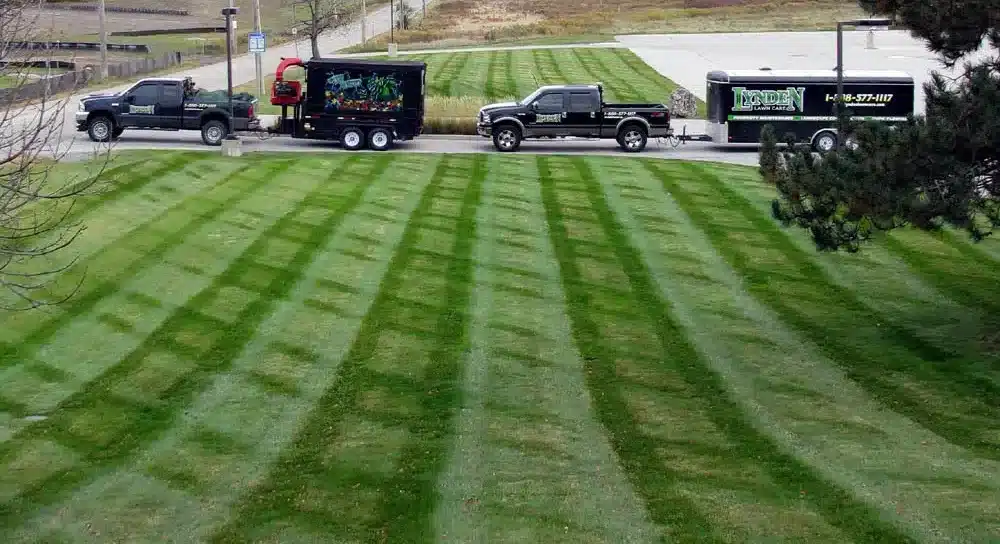
Property Maintenance
Specializing in full-service property maintenance, we offer lawn mowing, garden care, seasonal cleanups, and comprehensive landscape upkeep. Our commitment to communication, consistency and detail ensures your property maintains a polished, professional appearance in every season.
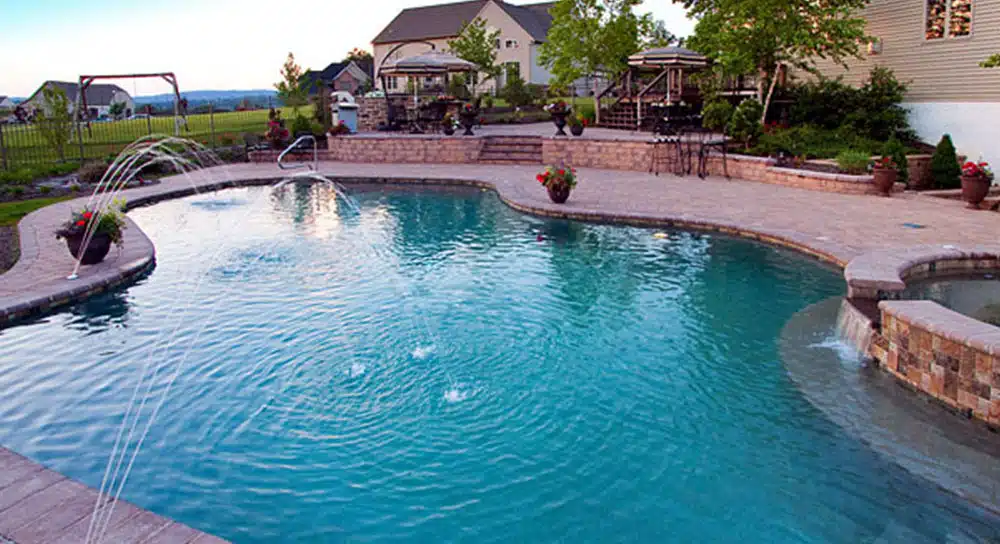
Landscape Enhancements
Our landscape enhancement services are designed to complement ongoing property maintenance by adding value and visual appeal. Whether it’s refreshing garden beds, installing mulch, or new garden bed design, we focus on

Snow & Ice Management
Ensure your property remains safe and fully accessible during winter with our comprehensive snow and ice management services. From precise plowing to strategic de-icing applications, our team proactively monitors conditions and responds quickly to maintain a clean, safe, and professional environment.
What Our Customers Are Saying!

Contact Us
If you would like a quote or to speak with someone about your lawn care and/or snow removal needs please call or fill out the quote below and we will get back to as soon as possible.
Contact
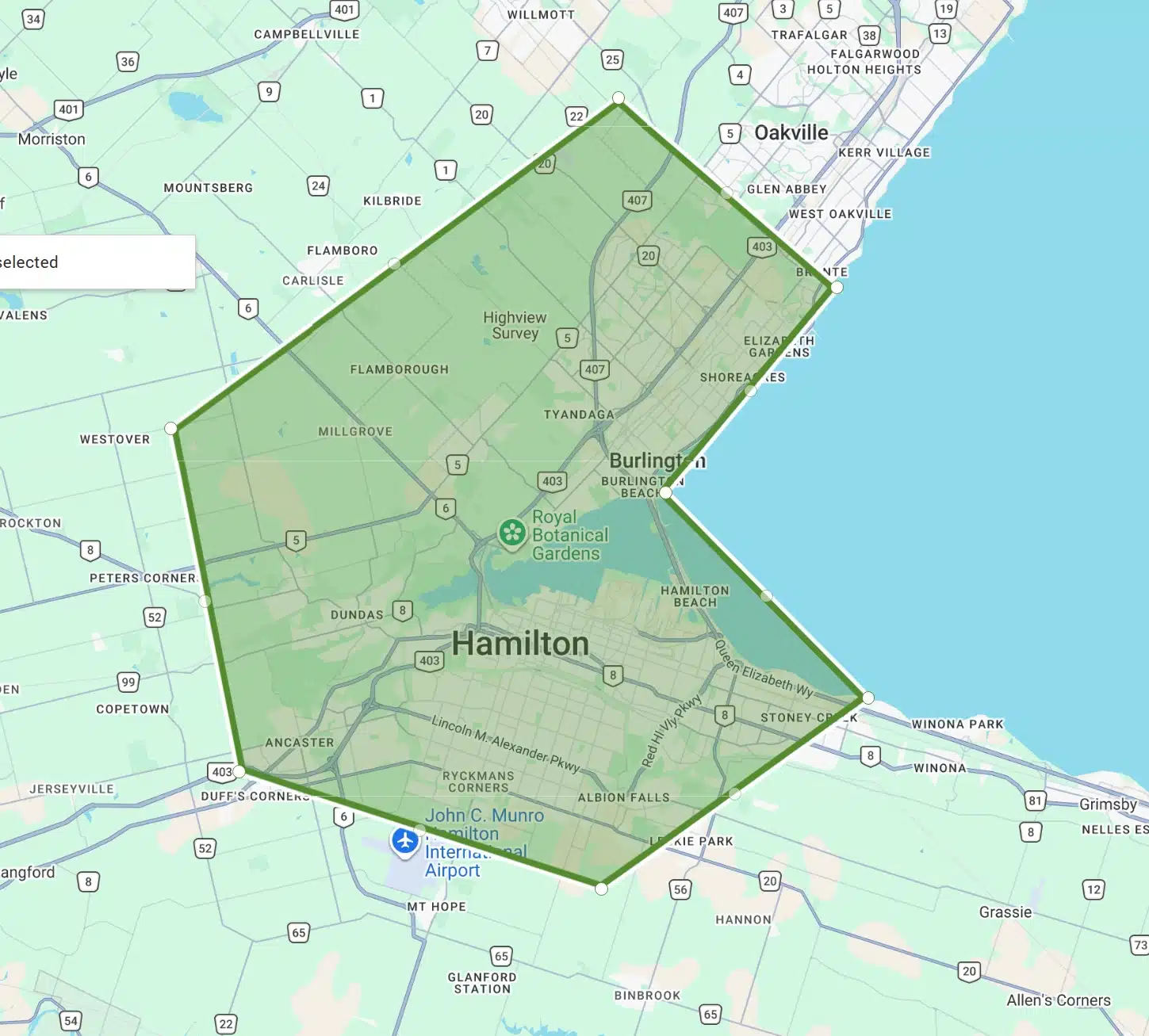
Service Area
OFFICE ADDRESS
(Inside Al’s Lawnmower)
1421 Grahams Lane
Burlington, ON Canada
L7S 1W4
PHONE
MAILING ADDRESS
PO Box 1390
Waterdown, ON Canada
L0R 2H0